Your Ford’s towing capacity is only as strong as the hitch securing your load. You’ve got options—from lightweight reducers to heavy-duty Class 5 systems—but how do you know which one won’t let you down on the road? We’ll walk you through seven hitches that’ll match your vehicle’s power and your towing ambitions, so you can haul with confidence.
Quick Overview
- Select hitch class (II, III, IV, V) matching your Ford vehicle’s maximum towing capacity specifications.
- Choose between 2-inch and 2.5-inch receiver sizes based on your planned accessories and towing needs.
- Prioritize high-strength steel with dual-layer rust-resistant coatings like electrophoretic or powder coating for durability.
- Verify gross trailer weight and tongue weight capacity don’t exceed your vehicle’s specifications for safety.
- Confirm straightforward bolt-on installation or plan professional installation based on your mechanical expertise level.
| RETRUE 2.5 to 2 Inch Hitch Reducer for Ford |

| Best Adapter | Gross Trailer Weight Capacity: Not specified | Receiver Size: 2-inch | Tongue Weight Capacity: Not specified | VIEW LATEST PRICE | Read Our Analysis |
| CURT Class 3 Trailer Hitch for Ford Transit |
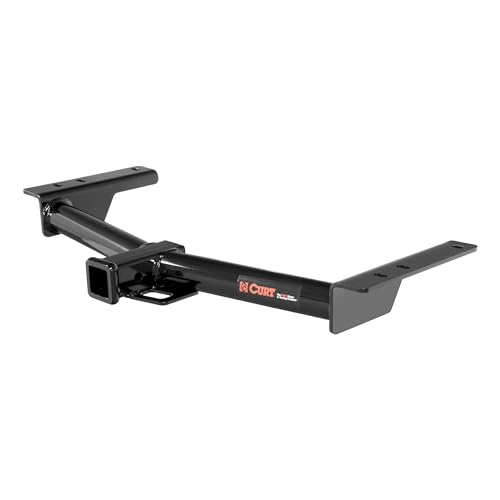
| Best For Transit | Gross Trailer Weight Capacity: 6,000 lbs | Receiver Size: 2-inch | Tongue Weight Capacity: 900 lbs | VIEW LATEST PRICE | Read Our Analysis |
| CURT 2-Inch Front Receiver Hitch for Ford Expedition |

| Best Front Hitch | Gross Trailer Weight Capacity: 5,000 lbs | Receiver Size: 2-inch | Tongue Weight Capacity: 500 lbs | VIEW LATEST PRICE | Read Our Analysis |
| Ford Bronco Hitch Tow Trailer Kit Receiver |

| Best For Bronco | Gross Trailer Weight Capacity: 3,500 lbs | Receiver Size: 2-inch | Tongue Weight Capacity: 350 lbs | VIEW LATEST PRICE | Read Our Analysis |
| CURT 14017 Class 4 Trailer Hitch 2-Inch Receiver Fits Select Ford F-150 |

| Best Heavy-Duty | Gross Trailer Weight Capacity: 10,000 lbs | Receiver Size: 2-inch | Tongue Weight Capacity: 1,000 lbs | VIEW LATEST PRICE | Read Our Analysis |
| Reese Towpower Trailer Hitch Class IV Ford F-150 |

| Best For F-150 | Gross Trailer Weight Capacity: 6,000 lbs | Receiver Size: 2-inch | Tongue Weight Capacity: 600 lbs | VIEW LATEST PRICE | Read Our Analysis |
| CURT Class 5 Trailer Hitch 2-Inch Receiver |

| Professional Grade | Gross Trailer Weight Capacity: 17,000 lbs | Receiver Size: 2-inch | Tongue Weight Capacity: 2,550 lbs | VIEW LATEST PRICE | Read Our Analysis |
More Details on Our Top Picks
RETRUE 2.5 to 2 Inch Hitch Reducer for Ford
If you’re towing heavy loads with your 2017-2025 Ford F250, F350, F450, or F550, the RETRUE 2.5 to 2 Inch Hitch Reducer is your solution for converting a 2-1/2 receiver to a standard 2 receiver. This durable steel reducer features an electrophoretic coating that resists rust and corrosion, ensuring longevity in harsh conditions. You’ll appreciate the precise fit and smooth, secure connection it provides for heavy-duty towing applications. Installation’s quick and straightforward, requiring minimal effort on your part. Weighing just 3.94 pounds, it won’t add unnecessary bulk to your truck. With a 4.9-star rating from customers and 24/7 support backing your purchase, you’re investing in reliable towing equipment.
- Gross Trailer Weight Capacity:Not specified
- Receiver Size:2-inch
- Tongue Weight Capacity:Not specified
- Rust Resistance Finish:Electrophoretic coating
- Installation Type:Quick and easy installation
- Steel Construction Type:Durable steel
- Additional Feature:Converts 2.5″ to 2″ receiver
- Additional Feature:Electrophoretic coating protection
- Additional Feature:24/7 customer support
CURT Class 3 Trailer Hitch for Ford Transit
The CURT Class 3 Trailer Hitch is an excellent choice for Ford Transit owners who frequently haul utility trailers, boats, or campers. This model 13193 features a standard 2-inch receiver and delivers impressive towing capabilities with a 6,000 lbs. gross trailer weight capacity and 900 lbs. tongue weight capacity. You’ll appreciate its weight distribution system, which handles up to 8,000 lbs. The hitch’s dual-coat finish resists rust, chips, and UV damage, ensuring longevity. Installation’s straightforward since it’s custom-fitted for select Ford Transit 150, 250, and 350 models. At just 31 pounds, it won’t burden your vehicle. SAE J684 testing confirms its reliability and safety standards.
- Gross Trailer Weight Capacity:6,000 lbs
- Receiver Size:2-inch
- Tongue Weight Capacity:900 lbs
- Rust Resistance Finish:Dual-coat rust, chip, and UV-resistant finish
- Installation Type:Easy to install, custom factory fit
- Steel Construction Type:Standard steel construction
- Additional Feature:8,000 lbs weight distribution capacity
- Additional Feature:SAE J684 tested standards
- Additional Feature:Dual-coat rust-resistant finish
CURT 2-Inch Front Receiver Hitch for Ford Expedition
Front-end towing capability opens up three major possibilities for your Ford Expedition: you can mount a winch for off-road recovery, install a snow plow for winter maintenance, or attach a cargo carrier for additional storage. The CURT 2-Inch Front Receiver Hitch delivers this versatility with a 5,000 lbs GTW rating and 500 lbs tongue weight capacity. Its carbon steel construction features dual-layer rust protection through A-coat and black powder coat finishes, ensuring durability in harsh conditions. The hitch meets SAE J684 specifications and boasts a 9,000 lbs straight-line pull capacity. Installation’s straightforward on your Expedition, and CURT backs it with a limited lifetime warranty. You’ll find it readily available online.
- Gross Trailer Weight Capacity:5,000 lbs
- Receiver Size:2-inch
- Tongue Weight Capacity:500 lbs
- Rust Resistance Finish:Dual-layer A-coat and black powder coat
- Installation Type:Easy installation, vehicle-specific design
- Steel Construction Type:Carbon steel
- Additional Feature:Front-end towing applications
- Additional Feature:Limited lifetime warranty
- Additional Feature:9,000 lbs straight-line pull capacity
Ford Bronco Hitch Tow Trailer Kit Receiver
Bronco owners looking to maximize their vehicle’s towing capability will find the Ford Bronco Hitch Tow Trailer Kit Receiver an essential upgrade. This hitch fits 2021-2025 Ford Bronco models in both 2-door and 4-door configurations, featuring a standard 2-inch square receiver. Installation’s straightforward—you’ll bolt it on without needing extra tools or modifications. The high-strength steel construction, protected by professional black powder coating, withstands harsh weather and road conditions. You’ll tow up to 3,500 lbs gross trailer weight with a maximum tongue weight of 350 lbs. The kit includes two varieties of mounting brackets for trailer power cords, so you’ll select the option compatible with your connector type.
- Gross Trailer Weight Capacity:3,500 lbs
- Receiver Size:2-inch
- Tongue Weight Capacity:350 lbs
- Rust Resistance Finish:Black powder coating
- Installation Type:Easy bolt-on installation, no modifications needed
- Steel Construction Type:High-strength steel
- Additional Feature:Compatible with 2-door/4-door models
- Additional Feature:Dual mounting bracket varieties
- Additional Feature:No extra tools needed
CURT 14017 Class 4 Trailer Hitch 2-Inch Receiver Fits Select Ford F-150
If you’re hauling substantial loads with your F-150, you’ll appreciate CURT’s 14017 Class 4 trailer hitch, which handles 10,000 lbs. of gross trailer weight and 1,000 lbs. of tongue weight. You’ll also benefit from its weight distribution capacity of 12,000 lbs. gross and 1,200 lbs. tongue weight, giving you flexibility for various towing scenarios.
The 2-inch receiver accepts ball mounts, tow hooks, and other accessories, making it incredibly versatile. You get high-strength steel construction with a dual-coat finish—liquid A-coat and black powder coat—that resists rust effectively. Installation’s straightforward since all necessary hardware comes included, and the hitch meets SAE J684 standards for reliable performance.
- Gross Trailer Weight Capacity:10,000 lbs
- Receiver Size:2-inch
- Tongue Weight Capacity:1,000 lbs
- Rust Resistance Finish:Dual-coat A-coat and black powder coat
- Installation Type:Easy to install, includes all hardware
- Steel Construction Type:High-strength steel
- Additional Feature:12,000 lbs weight distribution capacity
- Additional Feature:Accepts ball mount accessories
- Additional Feature:SAE J684 tested standards
Reese Towpower Trailer Hitch Class IV Ford F-150
The Reese Towpower Class IV Trailer Hitch is built for Ford F-150 owners who don’t want to compromise on towing capacity or installation convenience. This custom-designed hitch fits 2009-2014 F-150s and features solid all-welded steel construction with a protective Metalshield coating. You’ll appreciate its impressive 6,000 lbs GTW and 600 lbs TW ratings, which upgrade to 12,000 lbs with weight distribution systems. Installation’s straightforward—many applications require no drilling. The hitch meets rigorous V-5 and SAE J684 standards, ensuring reliable performance. With 459 customer reviews averaging 4.5 stars, you’re getting a proven product that delivers both durability and functionality.
- Gross Trailer Weight Capacity:6,000 lbs
- Receiver Size:2-inch
- Tongue Weight Capacity:600 lbs
- Rust Resistance Finish:Metalshield protective coating and powder coat
- Installation Type:Quick and easy DIY installation, many no drill
- Steel Construction Type:All-welded steel
- Additional Feature:Many no-drill applications available
- Additional Feature:Compatible with hitch accessories
- Additional Feature:459 customer reviews
CURT Class 5 Trailer Hitch 2-Inch Receiver
For owners of Ford F-250, F-350, and F-450 Super Duty trucks seeking serious towing capacity, the CURT Class 5 Trailer Hitch 2-Inch Receiver delivers the performance you’re after. You’ll get 17,000 lbs. gross trailer weight capacity and 2,550 lbs. tongue weight rating, handling substantial loads effortlessly. The hitch features a 2×2 receiver tube opening and comes with grade-8 mounting hardware for secure installation. CURT’s precision welding and multi-stage cleaning process, combined with liquid A-coat and black carbide powder coat, guarantee exceptional rust resistance. You can pair it with a weight distributing hitch for enhanced stability, and it’s tested to SAE J684 safety specifications for reliability you can trust.
- Gross Trailer Weight Capacity:17,000 lbs
- Receiver Size:2-inch
- Tongue Weight Capacity:2,550 lbs
- Rust Resistance Finish:Liquid A-coat and black carbide powder coat
- Installation Type:Custom fit, includes grade-8 mounting hardware
- Steel Construction Type:Precision welded steel
- Additional Feature:17,000 lbs gross trailer weight
- Additional Feature:Grade-8 mounting hardware included
- Additional Feature:Multiple cleaning stages process
Factors to Consider When Choosing a Ford Receiver Hitch
When you’re selecting a Ford receiver hitch, you’ll need to verify your vehicle’s compatibility and ascertain the hitch matches your truck’s specific towing capacity requirements. You should examine the receiver size specifications carefully, as they directly affect what trailers and accessories you can safely attach. Finally, you’ll want to evaluate the construction material quality and rust resistance coating to guarantee your hitch withstands years of use and harsh weather conditions.
Vehicle Compatibility And Fit
How do you guarantee your Ford receiver hitch will work seamlessly with your vehicle? Start by selecting a hitch specifically designed and tested for your Ford’s make, model, and year. Universal designs won’t cut it—custom-fit hitches optimize alignment, stability, and appearance while ensuring proper installation.
Next, verify the receiver tube size, typically 2-inch or 2.5-inch, matches your planned accessories. Check your vehicle’s towing capacity and match it against the hitch’s weight ratings to safely handle your intended load.
Finally, determine whether installation requires drilling or modifications. Some hitches bolt directly on, while others need alterations for secure fit. Understanding these compatibility factors upfront prevents costly mistakes and guarantees reliable, long-term performance on every towing job.
Towing Capacity Requirements
Your Ford’s towing capacity isn’t just a number—it’s a critical safety threshold that determines which hitch will work for your needs. You’ll find this specification in your owner’s manual or on the driver’s door jamb label, listed by model year and engine type.
Matching your hitch class to your vehicle’s capacity is essential. A Class II hitch handles up to 3,500 pounds, while Class III manages 5,000-6,000 pounds. Class IV and V hitches accommodate heavier loads for trucks and commercial applications.
Don’t overestimate your Ford’s abilities. Exceeding towing capacity strains your engine, transmission, and braking system, creating dangerous handling conditions. You’ll also void warranty coverage and risk component failure.
Calculate your total load weight, including the trailer, cargo, passengers, and tongue weight. Choose a hitch rating that comfortably stays within your vehicle’s specifications.
Receiver Size Specifications
Now that you’ve determined your Ford’s towing capacity, it’s time to select the right receiver size to match those requirements. Ford receiver hitches typically come in 2-inch and 2.5-inch sizes, each designed for specific towing needs.
You’ll want to contemplate several pivotal factors when making your choice. First, examine your gross trailer weight—the total weight of your loaded trailer. Next, assess the tongue weight, which is typically 10-15% of your total trailer weight. Your vehicle’s weight distribution capability also plays a vital role in this decision.
Heavy-duty Ford trucks often benefit from Class 4 or Class 5 receiver hitches, which provide maximum towing capacity for demanding jobs. Matching your receiver size to these specifications guarantees you’ll tow safely and effectively without compromising your vehicle’s performance or safety.
Construction Material Quality
The durability of a Ford receiver hitch depends heavily on the materials and construction methods used in its design. You’ll want to prioritize high-strength steel construction, which withstands heavier towing capacities and resists deformation under load. Check that your hitch features multiple protective coating layers, such as A-coat and powder coat finishes, to prevent rust and corrosion.
Welded designs offer superior structural integrity compared to bolt-on models, making them a more reliable choice. Steel thickness and grade directly impact load-bearing capability, so verify these specifications before purchasing. Finally, guarantee the hitch has undergone rigorous testing to industry safety standards, confirming it’ll perform safely during towing operations. These factors ensure you’re investing in equipment that handles demanding jobs reliably.
Rust Resistance Coating
Since steel receiver hitches constantly face moisture, salt, and road debris, you’ll need robust coating systems to prevent rust and corrosion. Electrophoretic and powder coating methods provide excellent protection, with dual-layer finishes like A-coat and black powder coat offering superior durability in harsh conditions.
The coating application process matters greatly. Quality surface preparation secures the finish adheres properly and maximizes long-term protection. Vehicle-specific designs often feature tailored coatings matched to your expected environmental exposure, so consider your climate when selecting a hitch.
Maintenance plays a pivotal role too. Regular cleaning preserves the coating’s integrity and extends its lifespan. By choosing a hitch with proven rust-resistant finishes and committing to basic upkeep, you’ll protect your investment and guarantee reliable towing performance for years.
Installation Difficulty Level
Installation difficulty varies noticeably depending on your Ford model and the specific hitch you’re considering. Some receiver hitches are engineered for straightforward bolt-on installation that requires minimal tools and no vehicle modifications. However, other setups demand more involved procedures that might challenge DIYers without mechanical experience.
Your expertise level should guide your hitch selection. If you’re comfortable working on vehicles, you’ll likely handle standard installations successfully. For complex configurations, though, professional installation secures your hitch and properly aligns it—critical for safe towing.
Before purchasing, assess the installation requirements against your skills and available time. Consider whether you’ll tackle the job yourself or hire a technician. This evaluation prevents frustration and guarantees your hitch performs reliably when you need it most.
Weight Distribution Capability
When you’re towing a heavy trailer, weight distribution hitches become essential for maintaining control of your Ford. These hitches spread the trailer’s weight evenly across your vehicle, drastically improving handling and stability during towing.
You’ll want to match your hitch’s weight distribution capacity to your specific towing needs. If you’re hauling larger, heavier trailers, selecting a hitch with a higher capacity guarantees safer operation. Exceeding your hitch’s weight distribution limit creates dangerous conditions—your Ford won’t handle predictably, and you’ll struggle to maintain control on curves and during braking.
Review your trailer’s weight and your vehicle’s towing specifications before purchasing. This careful consideration ensures secure, controlled towing every time you hit the road.
Warranty And Support Coverage
Because your receiver hitch is a critical safety component, you’ll want to guarantee you’re protected with solid warranty coverage. Many reputable brands offer limited lifetime warranties that provide valuable peace of mind for your investment.
When evaluating warranty options, prioritize manufacturers with proven track records of prompt customer support. You’ll benefit from responsive assistance with installation, maintenance, and any issues that arise during ownership.
Consider brands offering extended warranty coverage beyond standard protection. This added security can prove invaluable if problems develop.
Equally important is the availability of replacement parts and accessories. Verify that your chosen hitch manufacturer maintains adequate inventory and distribution networks, ensuring you can easily source components when needed throughout your hitch’s lifespan.

