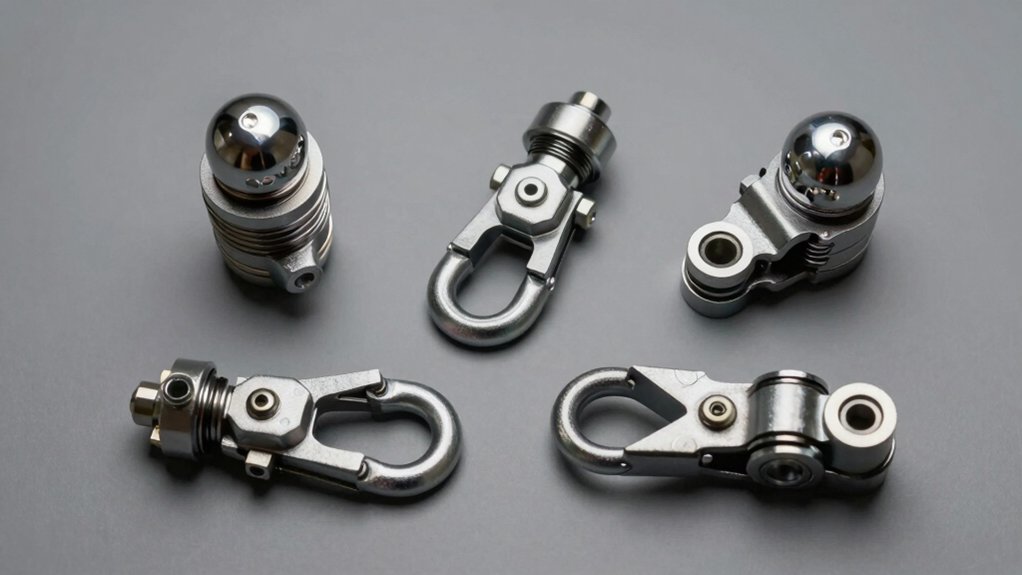
You shouldn’t grease your trailer hitch ball excessively. While lubrication reduces friction and improves coupler performance, grease attracts dirt particles that cause abrasive damage and accelerate wear. Instead, you’ll want to clean both surfaces thoroughly, apply grease sparingly to wear points only, and wipe the interior coupler clean. Consider alternatives like dry graphite spray or wax, which provide protection without collecting contaminants. Your best approach involves monthly inspections and strategic maintenance tailored to your hitch’s condition.
Does Greasing Your Hitch Ball Actually Help?
Why should you grease your hitch ball? Greasing reduces friction between ball and socket, making hitching and unhitching considerably easier. You’ll notice improved coupler locking performance and smoother connections during towing operations.
Regarding hitch ball greasing pros and cons, the advantages are clear: lubrication minimizes metal-on-metal wear, extends ball lifespan, prevents rust and corrosion, and eliminates squeaking for a quieter ride. However, hitch ball greasing techniques require caution. Dirt particles stick to grease, causing abrasive damage. Over-greasing traps contaminants and allows unwanted socket movement. For stubborn rust that develops despite lubrication, penetrating oil or rust remover spray with adequate dwell time can help restore compromised hitch balls.
Apply thin layers using spray white grease or lithium-based options designed specifically for hitch balls. Avoid excess application. Some systems like Andersen weight distribution shouldn’t be greased due to friction cone contamination risks. Quality hitch grease formulations with proper weather resistance help maintain reliable connections throughout varying climate conditions. A rubber hitch cover provides an effective barrier against environmental contaminants when your trailer is not in use. Consider using hitch covers or tennis balls to protect your hitch ball from dirt accumulation when not in use. Proper technique balances protection with cleanliness.
Hitch Ball Grease: Benefits vs. Dirt Attraction
Greasing your hitch ball delivers substantial benefits that you’ll experience every time you hitch or unhitch your trailer, yet it comes with a critical trade-off: dirt particle accumulation. Grease readily attracts dirt and debris, which then gets pushed onto your ball during hitching, causing abrasion damage that accelerates wear instead of preventing it.
You’ll need to weigh these competing concerns carefully. Standard hitches benefit appreciably from lubrication, but grease migration concerns require you to clean your ball regularly and use protective covers between uses. Hitch ball covers provide an effective barrier against weathering and environmental damage when your trailer is not in use. Regular cleaning helps reduce rust and corrosion that would otherwise compromise the integrity of your hitch system. For maximum protection, consider investing in trailer hitch locks to safeguard your coupling when not in use.
However, stabilizer hitch requirements demand you reconsider entirely. Anti-sway systems like Alko hitches need completely clean, dry surfaces for friction pads to function properly. Devices such as the Alko Hitch Lock Type 1 are designed to work optimally with clean coupling surfaces. Applying grease to stabilizer systems compromises their effectiveness and creates dangerous trailer sway conditions.
How to Grease Your Hitch Ball the Right Way
Once you’ve weighed the benefits against dirt accumulation concerns, you’ll want to follow a systematic process that minimizes mess while maximizing protection. Start by raising your coupler to access the ball adequately, then clean both surfaces thoroughly with appropriate tools. Before applying automotive-grade grease, inspect ball wear patterns on the top and bottom surfaces—these areas bear the heaviest load during towing. When checking coupler alignment, guarantee it sits properly on the ball before greasing. Apply grease generously to wear points, then wipe the interior coupler surface with a rag. Lower the coupler back onto the ball and tighten strut bars evenly on both sides. Always ensure the hitch pin is properly secured through the aligned holes before towing to prevent accidental separation. For maximum durability, select hitch pins made from zinc-plated or stainless steel to resist corrosion during storage and use. Greasing the ball once a year will prevent the coupler from rusting and getting stuck over time. Tighten all components to manufacturer torque specs for optimal safety and performance. This systematic approach prevents excessive mess while certifying adequate lubrication.
Beyond Grease: Wax, Dry Lube, and Covers Compared
While grease remains a popular choice for hitch ball maintenance, you’ll find that wax, dry lubricants, and protective covers offer distinct advantages depending on your towing habits and environmental conditions. Wax provides a thin protective layer that reduces abrasion while minimizing dirt attraction. Dry graphite spray deposits a film superior to traditional greases at wear points, preventing contaminants from sticking—ideal for seasonal lubrication variations. Covers shield your ball from environmental debris, maintaining lubrication effectiveness between sessions. When considering environmentally friendly options, dry lubes outperform wet alternatives by eliminating messy buildup. You should apply thin layers across all methods, avoiding over-application that traps dirt. The ball and socket joint design of your hitch requires targeted lubrication at both the top surface closest to the tow vehicle and the bottom where the coupler makes contact. Selecting the right maintenance approach depends on your hitch class and expected towing capacity. Combining these approaches optimizes protection and extends your hitch ball’s lifespan considerably.
Monthly Maintenance to Stop Rust and Buildup
Your hitch ball’s longevity depends on a straightforward cleaning and lubrication routine that you’ll perform monthly or before each use, depending on your towing frequency. During inspections, focus on grease condition monitoring by checking for dirt and debris that acts like sandpaper, damaging both ball and coupler. Clean away old grease using mineral spirits and a scrunched paper towel, then apply waterproof lubricant like white lithium grease in a smooth, flat layer.
Pay attention to material compatibility concerns when selecting lubricants—ensure products work safely with your hitch’s specific materials. Examine your receiver, ball, and hardware monthly for wear, cracks, or loose parts. Check safety chains and wiring connections during every use. Different hitch ball sizes require specific lubrication approaches to maintain their protective coating and prevent corrosion. Regrease whenever grease shows contamination rather than following a rigid schedule. When selecting lubricants, consider how they interact with steel or stainless materials commonly used in hitch construction. The correct hitch ball size matched to your trailer’s weight capacity ensures optimal performance and safety during towing operations. Major manufacturers recommend direct greasing of hitch ball to prevent metal-on-metal wear from twisting and turning. This proactive approach prevents rust formation and extends your hitch’s operational life considerably.