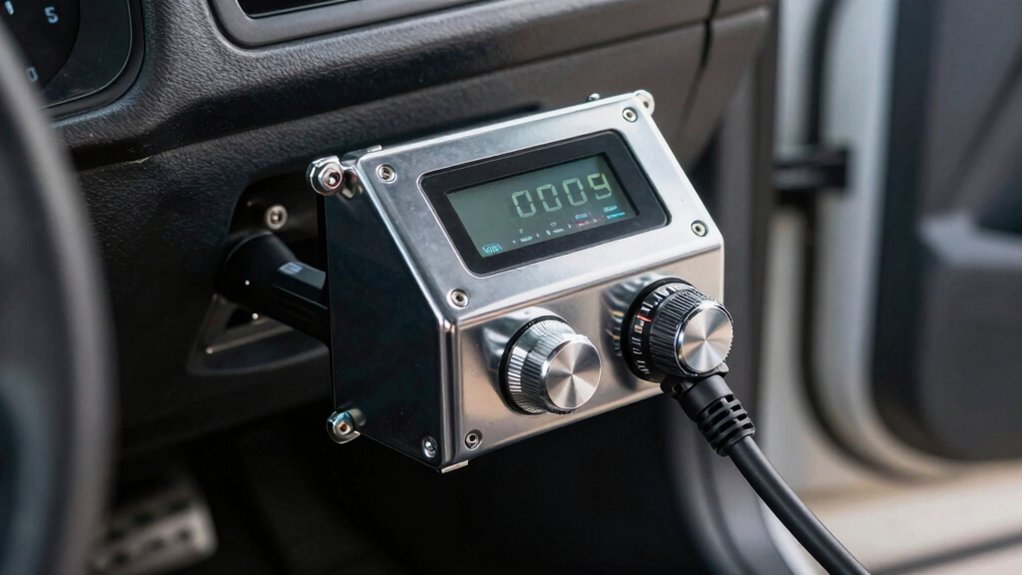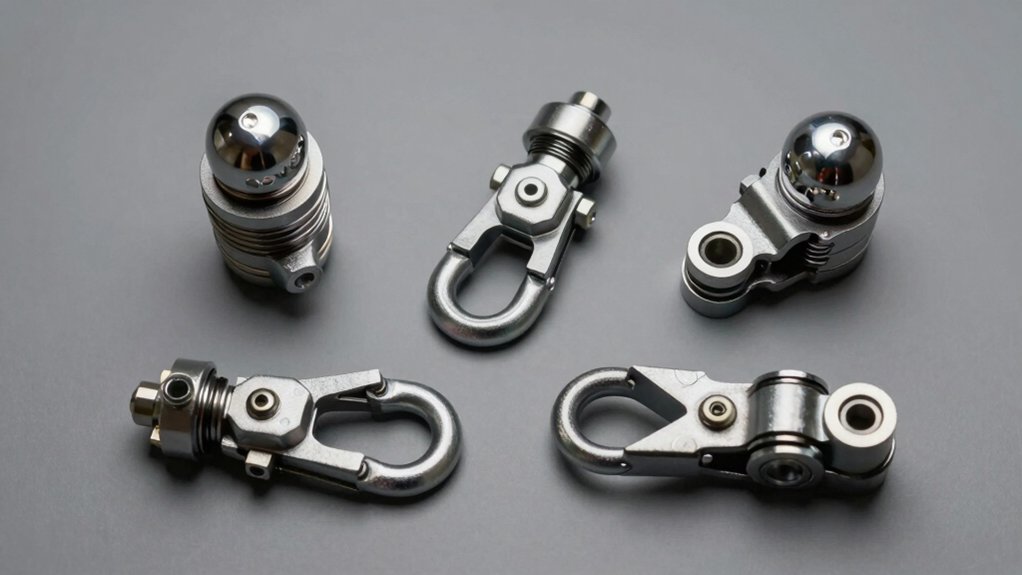
You can’t rekey a BOLT trailer hitch lock. Its one-time programming mechanism permanently binds the tumblers to your vehicle’s ignition key during initial installation. Once programmed, the irreversible design prevents reprogramming for different keys or vehicles. The spring-loaded tumblers align permanently to your key’s cuts and grooves, making rekeying impossible without destroying the lock entirely. Understanding why this security feature exists—and what your actual options are—reveals surprising cost-effective solutions.
The Short Answer: No, BOLT Locks Cannot Be Rekeyed
Because BOLT locks permanently bind to your vehicle’s key during initial programming, you can’t rekey them—and that’s by design. When you insert your key for the first time, the spring-loaded tumblers lock into place irreversibly. This one-time programming mechanism creates significant security risk tradeoffs: while preventing thieves from resetting stolen locks, it eliminates your flexibility when switching vehicles.
BOLT deliberately engineered this non-rekeyable architecture to enhance theft deterrence. However, this decision creates key transfer challenges you’ll face during vehicle exchanges. The installation process involves a simple quarter-turn mechanism that permanently binds the lock to your specific vehicle key. Unlike high-security hitch locks with Sold Secure Gold certification that can remain installed during towing, BOLT’s permanent binding means you cannot transfer it between vehicles. If you lose your key, you’ll need to consider lock-picking attempts or professional removal services to access your hitch. Methods such as reciprocating saw cutting or pipe leverage techniques may be necessary if standard access options are unavailable. You’ll need to purchase an entirely new lock system rather than simply reprogramming your existing one. The company positions this limitation as a security feature, not a flaw, prioritizing permanent vehicle-key binding over user convenience and adaptability.
Why One-Time Programming Blocks Rekeying
When you insert your key into a BOLT lock for the first time, special internal bars permanently align the spring-loaded tumblers to match your key’s specific cuts and grooves—a mechanical configuration that can’t be altered once set. This irreversible design protects the lock’s mechanical integrity by eliminating rekeying possibilities entirely.
The permanent programming mechanism prevents unauthorized access through standard locksmithing techniques. You can’t reset the tumblers to accommodate a new key, nor can you bypass this architectural constraint. This permanence also addresses key duplication risks by binding security directly to your original vehicle ignition key. If you sell your vehicle but keep the toolbox, the lock cannot be rekeyed to a new key, preserving the security of your equipment. For those who have lost their key entirely, options like bolt cutters or angle grinders may be necessary to remove the lock as an alternative to rekeying. Unlike vulnerable designs susceptible to shimming techniques, BOLT’s one-time programming creates a more secure foundation that resists common bypass methods. The weather resistance properties of quality hitch locks ensure that this permanent security mechanism remains effective even in challenging outdoor conditions.
The one-time programming creates an immutable relationship between your specific key and the lock mechanism, making rekeying physically impossible and ensuring your trailer’s security remains intact throughout the lock’s operational life.
What Happens If You Try to Program a Second Vehicle Key?
Once your BOLT lock’s tumblers permanently align to your first key, you can’t reprogram it with a second vehicle key. The lock’s design intentionally prevents unsuccessful reprogramming attempts by fixing tumbler positions after initial coding. When you insert an incompatible second key, the lock remains completely unresponsive—no adjustment occurs, and the tumblers won’t shift to accommodate the new profile.
Attempting to force a different key into the lock creates potential lock damage consequences. Removing an incompatible key while the lock remains disengaged risks internal tumbler misalignment, rendering the mechanism inoperable. This one-time programming architecture prioritizes security over flexibility, requiring full lock replacement if you use the wrong key initially. The vehicle’s key customization process is designed to occur only once during initial setup. Understanding the security ratings of different hitch locks can help you make an informed decision before committing to a particular model. To protect your investment, proper maintenance and regular inspection for wear will help ensure your lock functions reliably throughout its lifespan. Consider using additional anti-rattle variants and safety chain locks as complementary security measures for comprehensive trailer protection. Your only viable option is purchasing a new BOLT lock specifically coded to your replacement vehicle key.
Alternatives to Rekeying a BOLT Lock
Since you can’t reprogram a BOLT lock after its initial coding, you’ll need to explore other solutions if you’re locked out or switching vehicles. Your primary options involve lock cutting techniques or hitch assembly removal. You can employ an angle grinder for quick removal, completing the job in under one minute, though expect noise and sparks. Reciprocating saws work well in tight spaces with less mess but take longer. Drilling through the lock core destroys internal mechanisms without damaging the hitch body. When using an angle grinder, position the tool carefully to avoid damaging the receiver if the blade slips during the cutting process. For severely stuck assemblies, consider applying penetrating oils like PB Blaster to help break rust bonds before attempting removal. Alternatively, you can remove the entire hitch assembly for safer working conditions away from your vehicle. Once removed, you’ll replace the coded BOLT lock with a rekeying-compatible model like the Fastway lock, which accommodates multiple hitch sizes and permits rekeying as needed. This replacement approach mirrors the removable connection design principles used in gooseneck hitches, allowing for flexible equipment changes between different towing applications. Consider your property size and climate conditions when determining whether the effort of rekeying or replacing your hitch lock is worthwhile for your snow removal or towing needs.
How to Set Up Your BOLT Lock to Avoid This Problem
Proper initial setup of your BOLT lock eliminates the rekeying predicament entirely, since you can’t reprogram the device once it’s coded to your vehicle’s ignition key. Before installation, separate your key from its keychain and remove the warning sticker. Insert your vehicle’s ignition key into the lock cylinder and perform a single quarter-turn to establish the coding. This one-time operation permanently matches the lock to your specific key profile.
Implement coordinated backup systems by maintaining duplicate vehicle keys in secure locations. Establish physical security protocols requiring verification of hitch tightness after torquing to sixty foot-pounds. Test lock engagement post-coding with your vehicle key to confirm proper functionality. When selecting your BOLT lock, consider receiver size compatibility to ensure it matches your hitch dimensions for optimal security. Before securing your hitch receiver, ensure you understand the attachment points beneath the rear bumper where mounting occurs. For maximum durability in towing applications, select materials like steel or stainless that can withstand outdoor conditions and repeated use. Following the installation instructions carefully ensures all bolts are properly fastened during the hitch installation process. This methodical approach prevents key loss complications and eliminates future rekeying concerns.
How to Destroy a BOLT Lock if You’ve Lost the Key
Despite meticulous setup and backup protocols, you’ll occasionally face a scenario where key loss leaves you without access to your BOLT lock.
When standard locksmithing techniques fail, you’ll need to employ lock destruction methods. A breaker bar applies significant torque to shatter the lock mechanism in seconds, targeting the weakest structural point. Alternatively, a pipe placed over the lock exploits leverage, pulling until the side fails completely.
For faster results, freeze the lock with inverted compressed air, then hammer the casing to crack it. A slide hammer with a lag bolt screwed into the core yanks out the internal mechanism effectively. However, aggressive removal methods carry a risk of injury to yourself and potential damage to your hitch or trailer during the process.
Cutting approaches using a hacksaw with metal blades work on exposed components. While these methods destroy your lock permanently, they enable quick removal when key recovery proves impossible. Maintaining your hitch with quality trailer hitch grease can help prevent corrosion-related issues that may complicate lock operation over time. For those seeking prevention, investing in rust-resistant trailer hitch locks can help avoid corrosion that may complicate future key operation. Additionally, using anti-rattle clamps alongside secure locking mechanisms provides comprehensive stabilization and protection for your trailer hitch system.
When Buying a New BOLT Lock Costs Less Than Workarounds
When you’ve lost access to your BOLT lock, you’ll rapidly learn that purchasing a replacement costs considerably less than pursuing workaround solutions. A new BOLT lock runs under $50, while destruction methods—angle grinders, torch rentals, or bolt cutters—demand $20-100 in tool investments alone. Professional locksmith services exceed $75, making replacement economically superior.
Beyond immediate costs, consider collateral damage. Cutting or drilling risks hitch damage exceeding $100 in repairs, compounding expenses. Replacement preserves your equipment’s resale value retention and maintains warranty integrity, protecting insurance implications should theft occur later. Unlike door locks that can be rekeyed with a kit, trailer hitch locks lack standardized rekeying components, eliminating this cost-saving option entirely. The class rating of your hitch determines replacement lock compatibility and specifications. Proper installation of replacement locks requires torquing bolts to manufacturer specs to ensure secure attachment and prevent future damage.
Your loyalty program membership amplifies savings further, offering discounts on new locks during vehicle upgrades. This strategic advantage positions replacement as the methodologically sound choice—financially prudent and operationally efficient.