You’ll disengage your trailer hitch lock by first identifying whether you’ve got a pin-style or deadbolt model. For pin-style locks, insert your key, turn it to release the pin from the receiver holes, then pull the pin out. With deadbolt-style locks, insert the key at the bottom, turn to retract the internal bar, remove any secondary pin, and extract the main hitch pin. If your lock’s stuck, apply penetrating oil and sustained pressure with vise grips before resorting to cutting tools. Understanding your specific lock mechanism and maintenance practices will help you avoid these complications altogether.
Identify Your Hitch Lock Type
Before you can disclose your trailer hitch lock, you’ll need to identify which of the three main types you’re working with: trailer coupler locks, hitch pin locks, or receiver hitch locks.
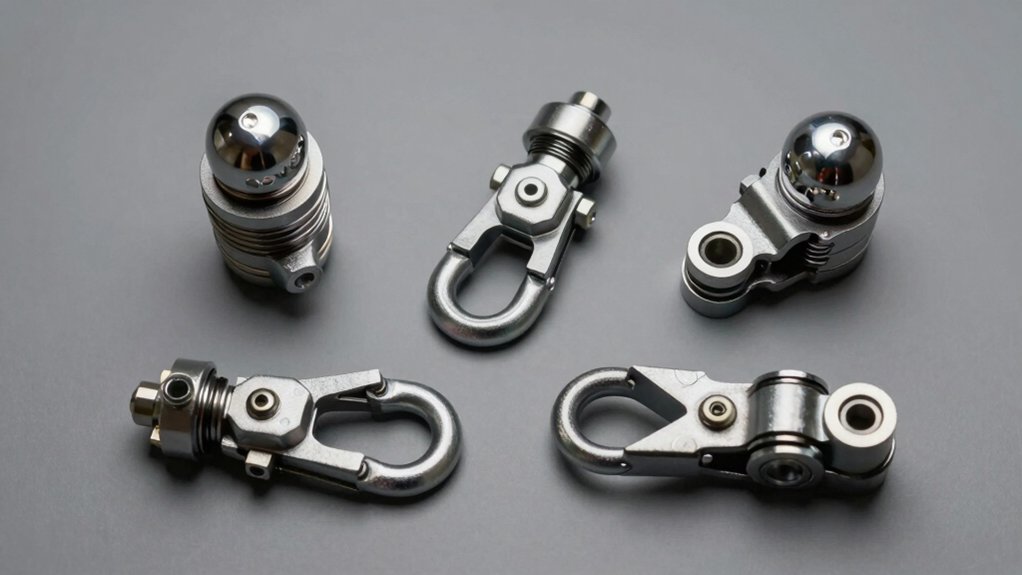
Examine your trailer’s coupling mechanism. Coupler locks feature a ball-shaped top fitting over the hitch tongue with a connecting bar securing the sides. Hitch pin locks fasten around the latch mechanism, particularly useful for types of latch style locks on utility trailers. Receiver hitch locks employ a metal pin with a lock on one or both ends. Proper coupler fitment is essential for safe towing, as mismatched components can cause separation and loss of control.
When selecting tips for choosing the right lock, match your lock to the hitch class. Class I-II hitches require half-inch pins, while Class III-V receivers need five-eighths inch pins. High-security key system designs like those found in premium locking hitch pins offer enhanced theft resistance for maximum trailer protection. The MasterLock Universal 389-DAT is a popular option that accommodates most standard coupler sizes for reliable security. Verify receiver size compatibility to prevent wobble or failure. Universal designs accommodate various coupler sizes, offering flexibility across multiple applications. If you find yourself with a stuck or jammed lock, penetrating lubricant and gentle tapping can help loosen the mechanism before attempting other unlock methods.
What Tools You’ll Need to Unlock It
Since different hitch locks require different removal methods, you’ll want to gather the appropriate tools before attempting any disengaging technique. For mechanical locks, prepare bolt cutters with heavy-duty jaws to sever softer steel pins, or an angle grinder equipped with a metal cutting disc for harder materials. Power drills with cobalt or titanium bits allow you to destroy internal tumblers and manipulate timing mechanisms within the lock body. Pipe tools provide leverage against vulnerabilities in the lock’s side structure. For locks with electronic components, you may need to disable electronic components through targeted drilling or grinding. Pick sets with tension levers and hook picks work for pin-tumbler designs. Many low-quality locks fail easily when subjected to brute force removal techniques that exploit structural weaknesses. Matching your removal approach to the specific pin diameter of your hitch lock ensures you’re using appropriately sized tools for effective disengagement. If you’ve lost your key, consider trying professional help before attempting removal yourself to avoid unnecessary damage. Safety equipment—goggles, gloves, and hearing protection—remains essential throughout any removal procedure. Before starting any removal method, ensure you have sturdy metal pipe available to serve as your primary tool for applying direct force to the lock mechanism.
Unlock Pin-Style and Deadbolt Locks: Step-by-Step
For pin-style locks, insert your key into the lock cylinder and turn it to release the pin from the receiver holes. Remove the locking assembly, then pull the pin straight out. Slide your ball mount from the receiver once the pin’s removed.
Deadbolt-style locks require inserting your key into the bottom of the lock cylinder and turning it to retract the internal deadbolt bar. Remove any secondary securing pin present, then pull the main hitch pin with its bent handle from the receiver. Withdraw your shank or ball mount from the hitch receiver. Hitch locks are a simple, often overlooked, but incredibly effective security measure that protects the critical connection when your trailer is left unattended.
Avoid overtightening when reinstalling pins for proper maintenance. For maximum effectiveness, consider using locking pins with swivel mechanisms for added security during extended storage. If you upgrade to a different vehicle, note that some locks like BOLT cannot be rekeyed to different keys and may need to be replaced. Regular inspection of weather resistance properties ensures your lock maintains effectiveness through varying climate conditions. Guarantee your pin diameter matches your hitch class—1/2-inch for Class I/II or 5/8-inch for Class III-V—to guarantee secure operation and longevity.
Free Stuck Hitch Locks Without Damage
Even with proper maintenance and correctly sized pins, you’ll occasionally encounter a hitch lock that won’t budge. Start by applying penetrating oils liberally to the lock barrel area, allowing time for the lubricant to penetrate corroded mechanisms. PB Blaster and similar products serve as effective preliminary steps before attempting mechanical removal. Remember that hitch locks can seize from lost keys, corrosion, or internal part failure, making patience with lubrication essential.
For stubborn locks, consider heat application. A torch can expand metal components slightly, potentially freeing corroded mechanisms. Alternatively, freeze methods using extreme cold temperatures weaken certain lock compositions. Understanding the security ratings and durability of your specific lock type can help determine which thermal method is safest for your particular design. Matching your hitch pin diameter to your receiver size ensures proper fit and reduces the likelihood of lock seizure in the first place.
When dealing with stainless steel lock designs, avoid aggressive cutting methods initially. Instead, apply sustained pressure using vice grips to prevent component spinning during removal attempts. This approach minimizes damage and prevents the need for repairing damaged locks later. For additional protection after successful removal, consider applying wire brushing and degreasing to eliminate any remaining corrosion from the hitch components. Only escalate to cutting techniques if lubrication and thermal methods fail.
Prevent Lock Problems and Lost Keys
The best strategy for avoiding lock problems is preventative maintenance, which you can accomplish through regular cleaning, lubrication, inspection, and rust prevention. You’ll prevent seizure by removing your lock periodically and exercising it to maintain removability. Apply lock-specific lubricant quarterly and after heavy rain to keep your keyway functioning smoothly.
Order multiple locks keyed alike to simplify key management and reduce lost-key complications. Store spare keys securely outside your tow vehicle. Understanding warranty coverage helps you address defects promptly before they worsen. Coupler locks should only be used when your trailer is parked or stored, never during towing.
Maintaining proper hitch alignment prevents excessive stress on locking mechanisms. Torque hitch bolts annually and inspect quarterly for rust, damage, and worn components. Verify the ball is fully seated using the jack test to ensure safe operation. Greasing your hitch ball regularly protects the coupler from wear caused by friction and the weight of towing. For comprehensive protection, consider using additional security measures like wheel locks, chocks, and safety chain locks alongside your hitch lock. These proactive measures greatly extend your lock’s lifespan and reliability.