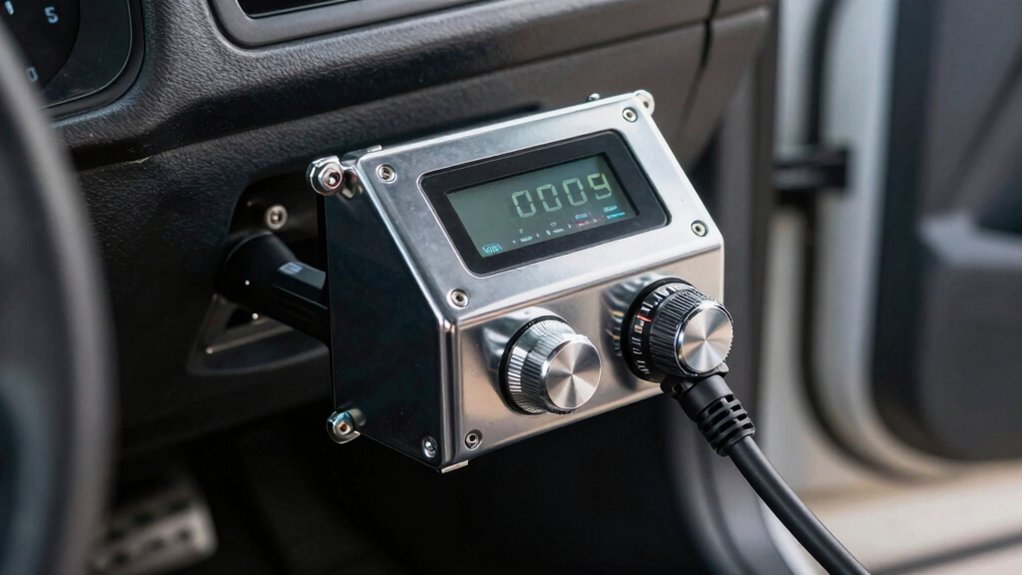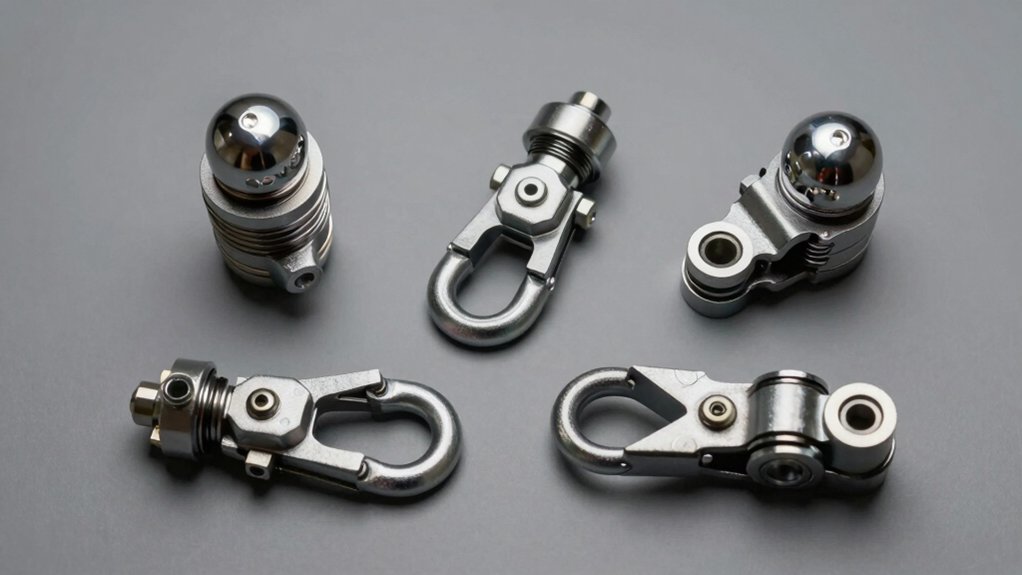
You’ll match your hitch class to the correct lock pin size—Class I/II use 1/2-inch, Class IV use 5/8-inch—then clean your coupler thoroughly with solvent and wire brush to remove grease and rust. Position your lock jaw directly above the coupler opening with zero clearance, slide your locking pin through receiver holes, and rotate the key to secure position. Cross your safety chains beneath the hitch and attach them with R-pins. These foundational steps form your primary defense layer, though an extensive strategy extends considerably deeper.
Match Your Hitch Class and Coupler Type to the Right Lock
You’ll need to nail down your hitch class and coupler specifications before selecting a lock, since mismatched components compromise security and safety. Class I and II hitches require 1/2-inch pin locks for capacities up to 3,500 pounds, while Class IV setups demand 5/8-inch pins for 10,000+ pounds. Universal lock compatibility simplifies selection across coupler sizes—1-7/8-inch, 2-inch, and 2-5/16-inch models fit tri-ball designs seamlessly. Your coupler type matters equally: A-frame and straight-tongue configurations need heavy-duty cast iron locks, whereas channel-style variants pair with sleeve-lock latches. Customizable lock security through adjustable positions accommodates multiple latch spans. Pintle and gooseneck couplers require specific matching mechanisms. Class III and Class V hitches handle intermediate and maximum towing loads respectively, so verify your vehicle’s total towing capacity aligns with the appropriate hitch classification. Ensuring at least 11 inches ground clearance prevents dragging during towing and maintains proper hitch geometry. For extended durability, consider durable materials such as zinc-plated or stainless steel that resist corrosion in various weather conditions. A chrome or zinc finish provides extra protection against rust and corrosion for long-term durability. By identifying your hitch class, receiver width, coupler diameter, and load capacity first, you’ll confidently select the appropriate lock system.
Clean Your Coupler and Inspect It Before Installing Any Lock
Before installing any lock, it’s critical to clean and inspect your coupler thoroughly—a step that directly impacts both security and operational reliability. Start by scrubbing the coupler interior with a scrunched paper towel, then spray shop solvent under the coupler to eliminate built-up grease. Apply WD-40, work the latch repeatedly, and use a wire brush on hitch components to remove surface rust. For stubborn rust deposits, consider applying penetrating oil or rust remover spray and allowing adequate dwell time before scrubbing.
Establish periodic inspection frequency based on your towing intensity—weekly or monthly cleaning guarantees optimal condition. After each cleaning session, perform thorough post cleaning inspection to verify free latch operation. Check for flat spots, pitting, corrosion, or latch difficulty. Dirty grease acts like sandpaper and damages the ball surface, so maintaining clean lubrication is essential for preventing premature wear. Lubrication repels water, dirt, and dust, protecting your hitch components from environmental damage. Properly functioning safety chains and pins should also be inspected during this process to ensure all attachment components are secure and operational. Apply white lithium grease or automotive bearing grease to the ball and coupler interior before installation. This preparation assures secure lock engagement and extends your hitch system’s lifespan.
Align Your Lock Jaw With the Coupler Opening
Proper alignment of your lock jaw with the coupler opening determines whether your hitch connection will be secure or compromise your towing safety. You’ll need to position the lock jaw directly above the coupler opening before lowering it onto the hitch ball. Adjust the carriage bolt height to achieve zero clearance in the lock vault, which confirms proper coupler latching and prevents unwanted movement during transport. Move your locking lever to the released position and spin the lock nut counterclockwise several turns. The flats on the nut must fit inside the nut locking channel perpendicular to the coupler sides. Once properly aligned, lower the coupler slowly while keeping it centered. A secure hitch connection requires that your towing vehicle’s capacity matches the trailer load weight to prevent operational failures during transit. Before towing, perform a pre-trip inspection to verify that the hitch mechanism clears the ball properly and functions as intended. For maximum security, consider pairing your hitch lock with safety chains to provide redundant protection during towing. Regularly inspect the hitch for signs of wear or damage to ensure ongoing security and prevent connection failures. This methodical approach maximizes hauling stability and eliminates safety risks associated with improper hitch connections.
Secure Your Receiver Pin and Ball Mount With a Locking Pin
Since theft remains a significant concern for trailer owners, installing a locking pin through your receiver and ball mount creates a robust security barrier that prevents unauthorized trailer separation. You’ll slide the long end of the pin through one of the visible receiver holes, then attach the locking mechanism. Rotate your key to the locking position, securing everything firmly. Conduct routine lock testing by tugging the ball mount—it shouldn’t move if properly secured. Implement proper key storage by keeping your keys in a safe location separate from your vehicle, preventing opportunistic theft. Consider investing in a MasterLock Universal 389-DAT or similar highly-rated locking mechanism, which offers rust resistance and compatibility with most standard coupler sizes. Always use the dust lock cover to protect your locking mechanism from grime and debris that could impair its function. Comparing security ratings and durability across available options helps you select the most reliable hitch lock for your specific needs. This straightforward installation method provides an inexpensive yet effective deterrent against trailer theft while ensuring your equipment remains protected during storage or transportation.
Lock Down Your Safety Chains So They Can’t Be Removed
While securing your hitch connection prevents trailer separation at the coupler, you’ll also need to lock down your safety chains to eliminate another theft vulnerability. Start by guaranteeing correct chain size matches your towing capacity—G70 chains offer breaking forces up to 45,200 lbs, while G43 chains range from 7,500-27,600 lbs. Cross both chains beneath your hitch before attaching them to the towing vehicle and trailer. Use R-pins to lock each attachment point securely after positioning chains through the hitch’s designated cutouts. This prevents accidental detachment during transport. Maintain chain integrity by inspecting zinc plating and welds regularly for corrosion or damage. Position your chains above the tongue’s bottom to resist road grinding and debris damage. Different hook designs and materials provide varying levels of durability depending on your specific towing requirements. Always select chains rated to match or exceed your trailer’s gross vehicle weight rating for optimal safety performance. Layered defenses with multiple locks create comprehensive trailer security beyond just the hitch connection. Proper locking techniques certify your safety chains remain functional backup systems that protect against trailer disconnection.
Stack Multiple Locks for Layered Defense Against Theft
Implementing multiple locks creates overlapping security barriers that’ll dramatically increase the time and effort required for theft. You’ll combine hitch locks with coupler locks to address both attachment and storage scenarios—forcing thieves to defeat two distinct mechanisms. Adding wheel locks targets mobility, creating a three-layer defense strategy.
Consider keyed-alike systems to simplify management across your lock combinations. This approach eliminates juggling multiple keys while maintaining thorough protection. Integrate chain and cable locks through your trailer frame for additional anchoring security. Hitch pin locks and coupler locks provide complementary security when used together as part of your overall protection plan.
Heavy-duty steel construction with tamper-resistant designs resists cutting and drilling. Premium options like the ICON Trailer Lock feature hardened cast steel construction that provides superior power-tool resistance. Visible multiple locks signal a secured trailer, deterring opportunists who’ll seek easier targets. Selecting locks with weather resistance capabilities ensures your security mechanisms maintain effectiveness throughout varying environmental conditions. For long-term security, be aware that BOLT locks cannot be rekeyed once programmed to a specific vehicle key, so plan your lock selection accordingly. While no lock is theft-proof, this layered methodology substantially slows attacks, making your trailer considerably less attractive.
Deploy Bright, Heavy-Duty Locks as a Visual Theft Deterrent
The appearance of your trailer lock carries nearly as much protective weight as its mechanical strength. You’ll deter casual thieves by deploying bright, heavy-duty locks that signal professional-grade security at your hitch connection point. Hardened steel construction with powder-coated finishes demonstrates durability while maintaining visibility in parking areas and storage locations. Select locks weighing at least eight pounds—the substantial heft requires significant removal effort, discouraging opportunistic theft attempts.
You’ll maintain a resilient lock exterior through bright metallic finishes that stand out against vehicle frames and receivers. Choose pick-resistant mechanisms with unique designs visible to observers, reinforcing your security posture. Quality locks with hardened steel construction resist the brute-force techniques that compromise lower-grade alternatives. Guarantee your deployment strategy enables seamless hitch compatibility across multiple trailer types using universal accommodation options. Consider options with anti-tampering swivel designs that provide enhanced resistance against removal attempts. The 1-7/8, 2, 2-5/16 ball and ring hitch sizes ensure broad applicability across flatbed, boat, landscape, utility, and car trailers. Verify that your selected lock matches your receiver size, as 2″ receivers typically handle up to 10,000 lbs, while larger options accommodate greater towing capacity. Position locks prominently upright during installation, maximizing the visual warning to potential thieves before they assess your equipment’s vulnerability.
Add GPS Tracking and Alarm Systems for Real-Time Recovery
GPS tracking and alarm systems complement your visible deterrent strategy by providing active recovery capabilities when theft occurs despite preventative measures. You’ll benefit from real-time movement tracking that updates every 1-5 seconds, enabling swift law enforcement response. Geofence alert monitoring notifies you instantly when your trailer crosses designated boundaries, triggering immediate notifications to your mobile device. Modern systems employ military-grade AES-256 encryption and 4G LTE/5G technology for reliable global coverage. Battery-powered units operate wirelessly without installation hassles, with magnetic cases securing to metal surfaces. The lithium batteries in these devices ensure multi-year operational capability, keeping your trailer protected continuously. You’ll gain unauthorized movement alerts, overspeed warnings, and location accuracy within 7-10 feet. Integration with physical locks creates an extensive security ecosystem. Recovery mode activates real-time tracking for lost assets, greatly improving retrieval odds when combined with your heavy-duty hitch lock deterrent.
Clean, Lubricate, and Inspect Your Locks Seasonally
Just as GPS tracking systems provide real-time recovery capabilities, routine maintenance builds preventative resilience into your trailer hitch security infrastructure by addressing wear, corrosion, and operational friction before they compromise your lock’s effectiveness. Conduct annual visual examinations during spring preparation, inspecting for rust, pitting, and damaged components. Apply dry lubricants sparingly to locking mechanisms—wet grease traps debris and moisture. Perform pre-use inspections before towing, and monthly checks during heavy use periods. Document your findings to track maintenance history and address recurring issues with specific components. Post-winter cleaning removes salt deposits and grime that accelerate corrosion. Cold weather preparation deserves extra attention, as freezing temperatures can seize locking pins. Quarterly reviews catch gradual wear affecting coupler locks and safety mechanisms early. Remove the hitch from your towing vehicle for easy access and detailed inspection of all components.