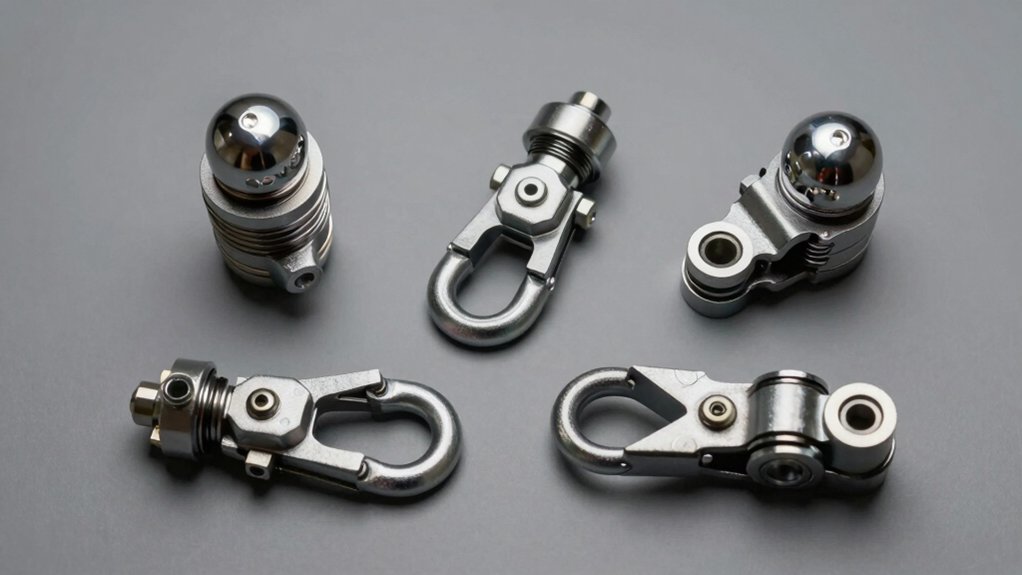
You’ll secure your trailer hitch to the ball by first relieving hitch pressure, then inserting your hitch pin through aligned receiver holes. Select a lock type—ball locks, barbell-style, or coupler-specific designs work best for your setup. Insert the pin, apply your locking mechanism with the key, and tighten bolts to specification. Test engagement and inspect regularly for wear. For maximum security, you can layer multiple locks together to prevent theft and unauthorized hitching.
Match Your Lock to Your Hitch Class and Coupler Size
Before you can select the right hitch lock, you’ll need to identify your coupler size—the critical first step in ascertaining your trailer. Check the stamped marking on your coupler head or measure the inside diameter with calipers to verify whether you have a 1-7/8″, 2″, or 2-5/16″ coupler.
Your choice between coupler specific designs and universal installation guides depends on your security priorities. Coupler-specific locks offer precision fit and eliminate play, delivering superior theft resistance through exact matching. Universal adjustable locks accommodate multiple trailer sizes with 11 adjustment points, providing operational flexibility but accepting slight play in their mechanisms. Hardened steel construction in premium coupler locks significantly enhances pick resistance and overall security performance. When transporting valuable equipment or boats, prioritize weather resistance features to ensure your lock maintains durability across varying environmental conditions. Top-rated options like the MasterLock Universal 389-DAT provide rust and corrosion resistance across standard coupler sizes. Consider locking mechanisms with double ball-bearing designs for enhanced security against unauthorized access and tampering.
Confirm your coupler size before purchasing any lock to certify proper trailer-to-lock compatibility and maximum security performance.
Identify Your Lock Type: Ball, Barbell, Receiver, or Puck
Now that you’ve confirmed your coupler size, you’ll want to choose from four primary hitch lock designs—each offering distinct security features and installation methods suited to different trailer configurations.
Ball and ring locks feature a high-security barrel system with universal compatibility across multiple ball sizes. Barbell-style locks employ a quarter-turn mechanism that minimizes obstruction while maintaining stable lock placement. Receiver hitch locks utilize deadbolt-style internal bars and L-shaped heads designed for recessed hitches with limited clearance. A visible device like these locks discourages theft by signaling your trailer is protected.
Pin-style locks represent the most basic option, replacing your standard hitch pin with a keyed alternative. Each design addresses specific vulnerabilities—prying, picking, or hammering—based on your trailer type and hitch configuration. The Alko Hitch Lock Type 1 provides heavy-duty steel construction with drill-resistant cylinder protection for premium security against unauthorized coupling and uncoupling. When comparing options, consider the security ratings and durability of each lock type to ensure maximum protection for your investment. The MasterLock Universal 389-DAT offers robust build quality and rust resistance across multiple coupler sizes for those seeking a reliable locking solution. Evaluate your vehicle’s hitch class, coupler dimensions, and accessibility requirements to select the most fitting lock design for ideal security.
Relieve Hitch Pressure Before Locking
Because trailer weight and vehicle alignment create tension that binds the coupler to the ball, you’ll need to relieve this pressure before engaging your lock. Start by moving your tow vehicle slightly forward or backward to slacken the coupling. Position wheel chocks behind the trailer wheels for stability. If tension persists, raise the trailer tongue using a jack to lift weight off the hitch ball. For fifth-wheel hitches, lower the landing gear to remove hitch pressure entirely.
Combine these vehicle movements with jack adjustments to achieve desirable clearance. This tension reduction strategy prevents binding and facilitates smooth latch engagement. Gooseneck hitches distribute weight across the truck chassis through central ball mounting for enhanced stability during this process. Avoid forceful manipulation, which risks crushing injuries and latch deformation. Properly aligned hitch components ensure that the coupler fits over the ball smoothly before final locking. Once you’ve relieved the pressure through strategic positioning and spring adjustment, your locking mechanism will engage cleanly and securely. The latching mechanism, whether a handwheel, lever, or toggle, grips the underside of the hitch ball when locked into place to create a secure attachment. Stow safety chains cleanly after disconnecting them to avoid damage during the unhitching process.
Install Your Hitch Lock Step-by-Step
With your hitch pressure relieved and trailer secured, you’re ready to install the lock mechanism itself. Start by extracting your lock from packaging and assembling any components, inserting the locking pin or bolt as needed. Position the trailer hitch into the receiver’s square or rectangular opening, then slide the inner portion into the ball mount or receiver until it sits snugly with no gaps.
Next, insert the hitch pin through aligned holes in both the receiver and hitch shank. If your lock features a shield, slide it over the inner component. For variant lock designs—including puck locks or coupler latch locks—align tabs carefully and slide into position. Guarantee your selected lock maintains compliance with standards for your hitch class. Be aware that low-quality locks are susceptible to brute force removal techniques, so investing in a sturdy OEM-grade lock provides significantly better security. Many owners who have lost their keys find that simple tools like bolt cutters or leverage methods can compromise inferior locks, which is why upgrading to a professional-grade mechanism is essential for long-term protection. Finally, apply the locking mechanism with your key, securing everything firmly before tightening any bolts to specification. Consider using additional security measures like wheel locks or safety chain locks to provide comprehensive protection for your trailer. After installation, test the lock to ensure a snug fit and proper security.
Test and Maintain Your Lock for Reliable Performance
Once you’ve installed your hitch lock, you’ll need to verify its security through a series of systematic checks and ongoing maintenance. Start by testing the locking mechanism—turn the key and confirm you feel resistance indicating proper engagement. Crank your trailer jack to relieve pressure, then tug longitudinally in multiple directions to simulate pulling stresses. Apply vertical loads to measure deflection and detect missing components or loose fasteners. Verify the pin slides securely without play. Regularly inspect hardened steel components for corrosion and lubricate moving parts if operation becomes stiff. Check O-rings and safety clips for wear. To ensure compatibility with your towing setup, verify that your pin diameter matches the receiver class—typically 1/2-inch for Class I/II hitches or 5/8-inch for Class III-V applications. Finally, verify tamper resistance by examining the lock for scratches, bent pins, or signs of breach attempts that’d compromise security. As a backup security measure, always cross-attach safety chains underneath the ball hitch to prevent accidental removal during towing. If you’re upgrading to a different vehicle, consider purchasing replacement cylinders to continue using your locks with new keys rather than replacing the entire lock system. Perform a jack test to ensure the coupler fully seats on the ball without gaps, as a partially engaged connection can cause trailer sway or detachment.
Layer Multiple Locks for Maximum Security
A single lock—no matter how robust—creates a single point of failure that determined thieves can exploit. To discuss theft deterrence strategies effectively, you’ll explore multifaceted locking systems combining different mechanisms.
Start by pairing hitch pin locks with coupler locks, securing both the ball mount and detached trailer. Layer in a ball lock that mimics your hitch ball, preventing hitching without removal. Add a deadbolt or barbell-style lock for additional receiver protection against prying and pulling. Receiver hitch locks fit into the receiver hitch of the tow vehicle and prevent unauthorized connection of trailers, adding another layer to your security setup.
Incorporate tri-ball locks blocking ball insertion across all coupler sizes, plus latch pin locks for latch couplers. Finally, use receiver locks with surround coupler locks covering the entire mechanism. For maximum security, consider high-security key systems that provide thousands of unique combinations to prevent unauthorized access. When selecting locks, opt for quality locking hitch pins with features like knurled grips and weather caps that resist tampering and environmental degradation. Regular maintenance to inspect for wear, damage, or rust will ensure your locks remain effective deterrents over time.
This extensive approach forces thieves to defeat multiple independent systems, dramatically increasing security and making your trailer substantially less attractive as a target.