You’ll find quality trailer hitch balls ranging from $15 to $70, though they span $7 to $275 depending on capacity and material. Entry-level chrome options cost $7–$10 for 2,000–3,500 lbs capacity, while standard 8,000–10,000 lbs models run $20–$30. Stainless steel construction adds $40–$60 for superior corrosion resistance. Your actual total bill depends on your vehicle’s towing demands, hitch ball size requirements, and installation complexity—factors that greatly/heavily/substantially impact your final investment.
What’s a Fair Price for a Hitch Ball? ($7 to $275 Explained)
You’ll find hitch balls ranging from $7 to $275, with most quality options landing between $15 and $70. Entry-level chrome balls with 2000–3500 lbs capacity cost $7–$10, perfect for light towing. Standard models rated 8000–10000 lbs run $20–$30 and offer solid hitch ball durability for typical use.
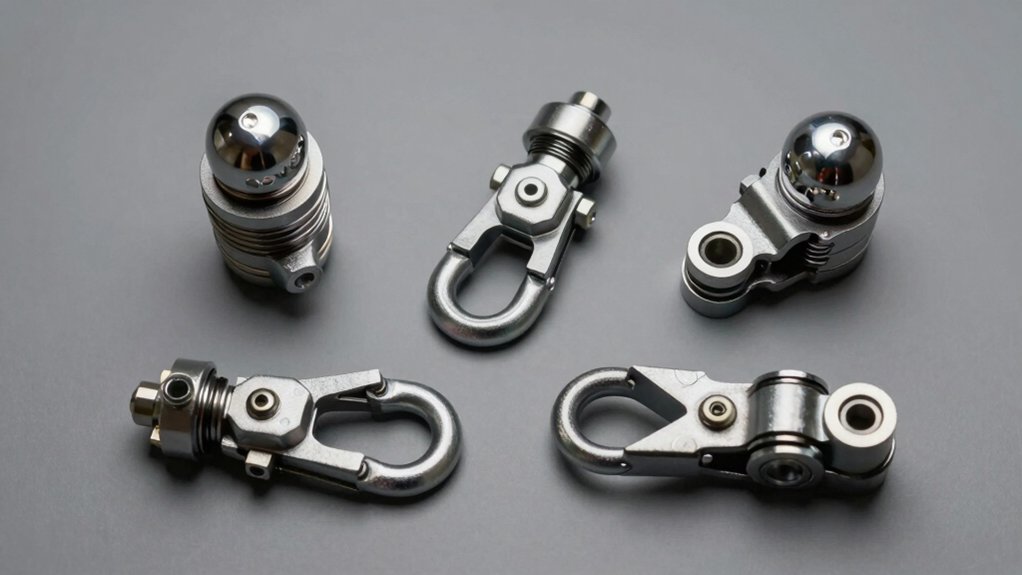
Stainless steel construction adds $40–$60 to your investment, providing superior corrosion resistance. Cushioned RockerBall designs cost $50–$70 but reduce vibration during towing. Premium interchangeable multi-ball sets range $40–$275, offering versatility with hitch ball accessories integrated into one package. Common shank diameters include 3/4 inch, 1 inch, and 1-1/4 inch sizes to match your specific ball mount requirements. The hitch ball threads onto your ball mount to form the coupling point with your trailer’s coupler. Matching the ball size precisely to your trailer’s coupler is critical for safe towing and prevents dangerous issues like swaying or detachment. The four primary trailer ball diameters—1-7/8″, 2″, 2-5/16″, and 3″—each serve different towing applications, so selecting the correct ball diameter for your load capacity is essential.
Your fair price depends on towing capacity, material, and features. Basic chrome suits occasional hauling, while stainless steel or cushioned options justify higher costs for frequent towing and extended durability.
Hitch Ball Sizes and Weight Ratings: Find Your Match
Three standard hitch ball sizes dominate the market: 1-7/8 inches for light-duty applications, 2 inches for medium-duty hauling, and 2-5/16 inches for heavy loads. Each size carries specific weight ratings you must respect. The 1-7/8 inch ball handles up to 3,500 lbs, while 2 inch balls support 3,500 to 12,000 lbs depending on configuration. The 2-5/16 inch accommodates 10,000 to 30,000 lbs maximum.
Your trailer type compatibility determines which size you need. Small utility trailers pair with 1-7/8 inches, travel trailers use 2 inches, and RVs demand 2-5/16 inches. Receiver tubes come in standard sizes of 1-1/4″, 2″, 2-1/2″, and 3″ to accommodate different hitch ball configurations and towing requirements. The two-inch ball remains the most popular option for general towing applications across various price points and capacities. To ensure a solid connection, the ball diameter must match the coupler size precisely. Every hitch ball has a maximum load rating that must meet or exceed the trailer’s GVWR. Don’t overlook tongue weight considerations—calculate 10-15% of your gross trailer weight to guarantee proper load distribution and stability. Always match your ball size precisely to your trailer’s coupler diameter.
Chrome vs. Stainless Steel: How Material Choice Impacts Cost and Lifespan
While chrome-finished balls offer an attractive mirror-like shine, that aesthetic appeal comes with a significant durability tradeoff. You’ll find that chrome coatings chip and peel easily, particularly under weight distribution hitch systems that apply substantial vertical loads. Once exposed, the underlying steel rusts rapidly.
Stainless steel delivers superior corrosion resistance characteristics through built-in chromium content that self-heals when scratched. The tensile strength differences are notable—stainless steel exhibits higher yield strength than chrome alternatives, making it more durable for frequent towing. Unlike chrome plating, stainless steel is an alloy that maintains its protective properties throughout the material’s thickness. Different hitch classes accommodate varying towing capacities and material requirements based on your vehicle’s specifications. For example, Class 3 hitches support up to 8,000 lbs gross trailer weight with standard ball materials, while Class 4 options handle higher capacities. When selecting materials for your trailer hitch ball, it’s important to consider how durability and weight capacity directly influence your overall towing safety and reliability.
You’ll pay slightly more upfront for stainless steel, typically $28 or less for standard two-inch sizes. However, the longer service life justifies the investment. Chrome requires earlier replacement due to coating degradation, making stainless steel the more cost-efficient choice for regular towing operations.
Budget vs. Premium: Where Your Money Actually Goes
The trailer hitch market spans a dramatic price range—from budget balls at $7.60 to premium adjustable systems exceeding $500—and understanding where costs concentrate reveals which tier fits your towing needs.
Your return on investment depends directly on towing capacity considerations. Budget models ($7.60–$13.91) handle light-to-medium duty applications with 2,000–8,000 lbs capacity. Mid-range options ($16.57–$52.50) deliver balanced value, offering dual-ball versatility and 8,000–12,000 lbs ratings. Premium systems ($220–$330) justify higher costs through adjustable drop/rise functionality and 14,000 lbs capacity for heavy-duty hauling.
The sweet spot clusters around $200–$250, where you’ll find advanced engineering meeting practical durability needs. For example, the Curt Fusion hitch combines affordable pricing at $30 with impressive 7,500 lbs towing capacity and a 4.6 review rating. Most common towing activities like camping, boating, and motorsports align well with Class 3 trailer hitches, which offer standard 2-inch receiver tubes and balanced capacity ratings. Choose based on your actual towing demands rather than aspirational capacity—undersized hitches create safety risks, while oversized purchases waste money on unused capability.
Installation and Compatibility: What Determines Your Total Bill
Selecting the right hitch ball is only half the equation—installation and compatibility variables will ultimately determine what you’ll actually pay. Your vehicle’s make and model directly impacts labor costs, particularly if you’re driving a luxury vehicle or compact car with specific vehicle customization requirements. Receiver hitches require minimal labor ($75–$150), while fifth-wheel installations demand bed drilling that costs hundreds extra. Hitch type variations matter considerably: gooseneck hitches involve cutting or drilling, escalating professional labor to $100–$180. Factory-equipped towing packages reduce modification needs, saving you money upfront. Geographic location compounds expenses—urban installers charge more than rural counterparts. Dealer markups exceed independent shops. Professional installation ensures the job is done correctly and safely, protecting your investment. Before beginning installation, ensure you have gathered necessary tools like wrenches and torque wrenches to complete the work properly. Hitch pin diameter selection—typically 1/2-inch for Class I/II hitches or 5/8-inch for Class III-V applications—ensures compatibility with your specific receiver type. For secure attachment, bolts should be torqued to manufacturer specifications], typically ranging from 100–150 foot-pounds. DIY installation saves $150–$200 but risks safety errors. Your total bill hinges on these compatibility factors working together.